Photography
and Privacy
The following is an overview of privacy related to photography in the United States. It is meant to be informative only.
Street photography in the United States exists at a dynamic intersection of legal rights, privacy and ethical responsibility. Legally, street photography benefits from very robust protection under the first amendment of the constitution. In a public space, no one has an expectation of privacy. This creates tension between a photographer’s artistic legal right and a person desire for privacy.
THE LEGALITY OF PRIVACY IN PUBLIC
Under the First Amendment, public spaces offer no legal expectation of privacy in the United States. The baseline legal standard revolves around the concept of “reasonable expectation of privacy.”
The Public Space Rule:
If you are standing in a genuinely public space—such as a city sidewalk, public park, plaza, or beach—there is no legal expectation of privacy. Anyone or anything visible from that vantage point is fair game to photograph without prior consent. This includes strangers, children, accidents, crime scenes, celebrities, infrastructures, private or commercial buildings, modes of transportation and related facilities (autos, airports, trains, bus, vessel), or law enforcement visible from the street or public place.
The Private Property Shift:
The moment you step onto private property (e.g., a shopping mall, an Apple store, a restaurant, or a transit hub), public rights expire. You must abide by the owner’s rules. Property owners or security personnel can legally ask you to stop shooting or leave the premises.
Intrusive Framing:
Even if you are standing on a public sidewalk, using a telephoto lens to photograph through the windows of a private residence violates a person's expectation of privacy and can lead to legal liability.
Artistic vs. Commercial Use:
You can legally display, publish online, or sell your street photographs as fine art prints or editorial content without a model release. However, if you plan to use an identifiable person’s image for commercial purposes (like advertisements, product endorsements, or corporate marketing), you must secure a signed model release. Consult your state civil code. In California, consult civil code 3344 for specific information related to image use.
Conduct vs. Photography:
Taking the photo is legal in public, but harassment is not. Following a subject persistently, blocking their path, or behaving aggressively changes the situation from street photography to stalking or disturbing the peace. Be mindful of your shooting style. Photographers like Bruce Gilden are famous for a highly aggressive approach—jumping close to subjects and firing a flash. While legal, this style can cause genuine distress. Deciding how intrusive you want to be is a core personal ethical choice.
Expectation of Privacy in Public:
Certain areas within public spaces carry an inherent expectation of privacy. You cannot photograph inside public restrooms, locker rooms, or medical tents set up at public events.
HALO Laws:
In certain states police and first responders benefit from HALO law which state any photography of their duties must be performed beyond 25 feet. This doesn’t allow the police to repeatedly approach you moving you back 25 feet each time creating a distance larger than 25 feet between you and their duties. California doesn’t currently have a HALO law.
Airports and Photography:
Photography is legally permitted in the public areas of publicly owned airports in the United States, as these spaces are generally protected under the First Amendment. However, while the general rule allows you to shoot freely, navigating an airport with a camera requires balancing constitutional rights with federal security regulations and airline property rules.
The Checkpoint Rule: According to the official TSA Security Checkpoint Policy, travelers are allowed to film and take photos at security checkpoints. Your photography must not interfere with the screening process. Prohibited actions include blocking lines, holding cameras directly in officers' faces, or photographing equipment monitors that are shielded from public view.
Law Enforcement: You have a legal right to photograph TSA agents and police officers in public view. Officers cannot demand to see or delete your photos without a warrant.
Airline Rules Control: Once you step onto an airplane, you are entering private property. Airlines maintain their own individual photography policies.
Passenger Privacy: Most U.S. carriers permit casual photography (such as window shots or seat selfies) but strictly prohibit taking photos or videos of other passengers or crew members without their explicit consent.
The Tarmac: Photography is frequently restricted when walking on the tarmac or boarding via stairs. Airport staff usually enforce this as a safety and operational measure to keep passengers moving efficiently.
ADDITIONAL RESOURCES:
ACLU: Photographer’s Rights
The Photographer’s Right: Legal Guide
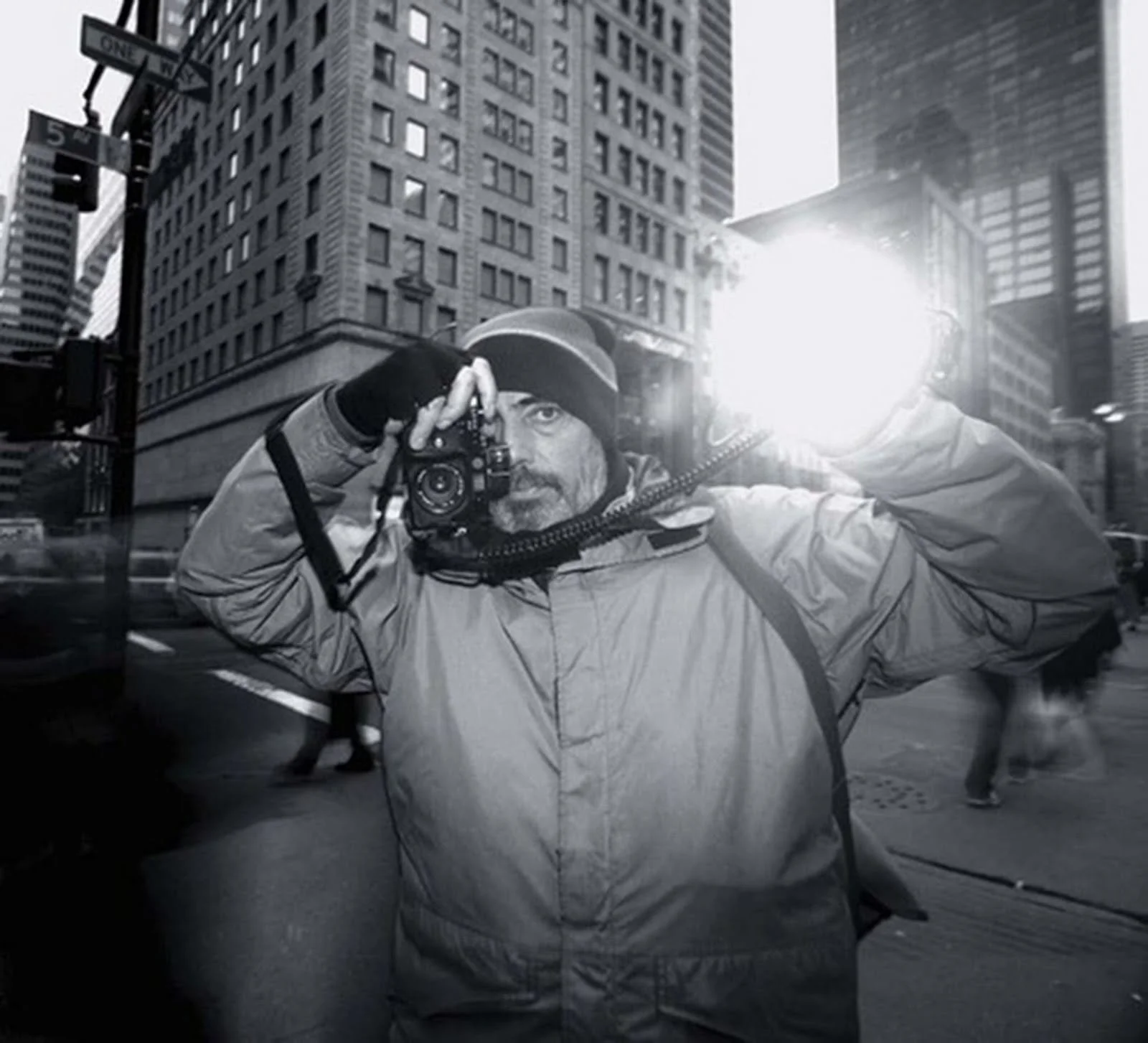
Noted Street photographer Bruce Giden. (Not my photograph)