Confrontations
on the Streets
Confrontations in street photography are an infrequent but unavoidable reality that highlights the tension between legal public rights and the human expectation of privacy. Most of the time, people are more curious and interested in your camera than upset about being photographed. Below are my best practices of street photography and the inevitable confrontation.
How do others see you?:
It all begins with how you are perceived by others. Develop confidence!
Do not hide. Walk with positive energy and confidence. Dress neat and clean. Take your picture smile or make a short positive comment and move on. You are not doing nothing wrong, so don’t act like you are. Appearing to have a lack of confidence, tends to make you seem suspicious. Remember, if you are working an area, potential subjects will likely see you work before you get to them. Their observation will set the tone on how they may interact with you.
Smile and Be Able to Explain What You Are Doing:
Take photographs of people is a type of relationship. Don’t take a picture, ignore them and walk away if they are interested in what you are doing. Stop and offer friendly chat. If someone asks what you are doing, be honest, polite, and confident. Compliment them and explain what was your motivated photograph them. Having a simple explanation ready—such as "it was really interesting how the light was creating highlights in your hair." or a short comment, “I am documenting this local farmer’s market for a personal project.”—is often enough to satisfy curiosity.
Read Your Environment:
Not every scene or person is suitable at that given moment for a photograph. If someone seems tense, vulnerable, aggressive or obviously uncomfortable, generally it better to move on. Good Street Photography is about exercising good judgement.
Don’t Be Afraid to Ask for Permission:
I prefer candid street work, but occasionally I will ask for permission. I introduce myself and explain why I would like to take their picture. Most of the time I get permission. When I do, I quickly take numerous frames from different angles and distances, and occasionally ask the subject to try a couple different poses. I usually hand them a business card, and offer to send them digital copies, if they leave their email on the website.
Introduce Yourself and Offer a Way to Contact You:
People are suspicious of strangers, especially one taking pictures of them. Don’t be stranger. Introduce yourself using your full name. I have a website of my work and carry a business card with a QR code on the back that takes the person to my website. My website is mainly for family and friends to see my latest work. However, the business card and website, dispels the “creep” factor by making my efforts legitimate, friendly and informing strangers who I am. It almost instantly de-escalates any confrontation.
Do Not Enter Fundamental Debates as a Defense:
If someone is against street photography, you will likely not change their mind or attitude to it by debating your legal rights. It is better to remain calm, respectful and end the situation. I rarely get into discussion about privacy laws, unless there is a true interest in understanding law. If they are adamant about you breaking the law I offer to wait, if they would like to call law enforcement.
Put Publication Into Perspective:
It may help if you say that the image will not be automatically published or used but be part of your own archive or personal project. Occasionally, this is enough to calm the situation.
To DELETE or NOT TO DELETE:
I always offer to send a digital copy of the picture for free. If a subject remains genuinely upset or uncomfortable, offer to delete the photo on the spot. Treating deletion as a sign of basic human respect, rather than a defeat, keeps you safe and de-escalates the situation instantly. It’s better to avoid animosity and not ruin someone’s day.
Be Mindful of Cultural Differences:
If you are in a large city or state capitol or tourist area, don’t assume all subjects know or are comfortable with US privacy laws. I usually begin a conversation with, “Are you from Sacramento?” It gives me a read about the type of the objection. Some may object due to cultural or religious reasons. so, offering to delete the photo is the better practice. You are acting as an ambassador to your country and town. Being friendly and understanding of cultural difference is a better practice, than callously enforcing your legal rights.
Law Enforcement:
Police officers cannot order you to stop taking photos in public spaces unless you are actively obstructing an active crime scene or interfering with their duties. They cannot demand to see your photos without a warrant. Assert your rights calmly ("Officer, I am photographing from a public sidewalk, which is protected under the First Amendment"). Never physically resist an officer. If they insist, comply under protest and handle the constitutional violation later.
Resources:
I found not only inspiration, but information on how to other photographer’s shoot street and handle confrontations by watching them work on YouTube. A series I like is called Walkie Talkie by Paulie B, which interviews street photographers while they work.
YouTube Video: Everybody Street
This free documentary interviews famous street photographers and show them working.
“Street photography offers no hiding place, requiring courage and judgment in the middle of the action.”
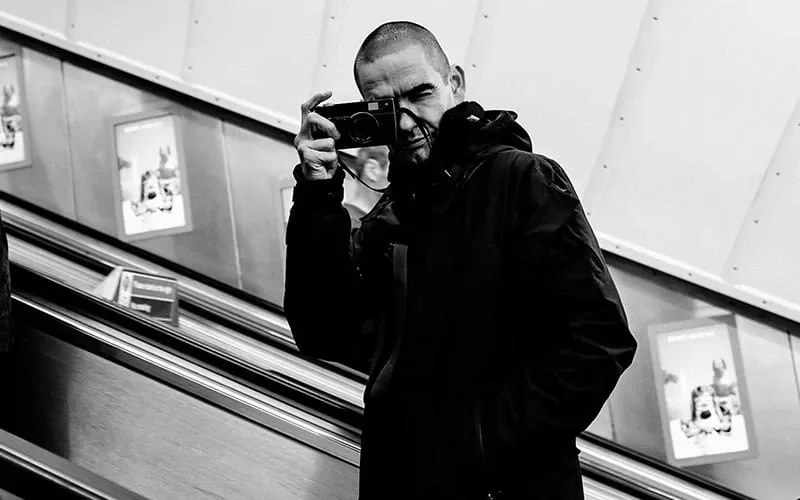
Noted photographer Vladimir ‘Boogie’ Milivojevich at work
(Not my photograph)